Ohio Cottage Food Laws: What You Can Sell
Short answer
Yes. Ohio lets you make and sell certain low-risk foods from your home kitchen without a food license under ORC 3715.025 and OAC 901:3-20. Bakery items, jams, candy and granola qualify if labeled “This product is home produced.” Cheesecake, cream pies, salsa and canned goods do not.
Last verified: November 2, 2026 against the Ohio Revised Code, Ohio Administrative Code Chapter 901:3-20 and the Ohio Department of Agriculture
Ohio cottage food laws let home cooks sell a short list of safe, shelf-stable foods straight to customers without a commercial kitchen. If you bake bread for a farmers market, make jam for neighbors or want a small home bakery, this is the rule set that applies to you.
The list is narrow, the label has to say the right words, and anything outside the list needs a different license. Here is how it works.
Key facts
- No food license is needed for foods on the state’s cottage food list.
- Rules come from
ORC 3715.025,ORC 3715.023andOAC 901:3-20-01to901:3-20-05. - Required label statement: “This product is home produced.” in 10-point type.
- Sales must stay inside Ohio. Selling cottage foods out of state is banned.
- Foods that need refrigeration, like cheesecake and cream pies, are not allowed.
- The Ohio Department of Agriculture can take samples of any cottage food product.
Does Ohio have cottage food laws?
Yes. Ohio has had a cottage food law since September 10, 2012, when House Bill 487 added ORC 3715.025. A cottage food production operation is a person who makes food in their home that is not a potentially hazardous food, such as bakery products, jams, jellies and candy (ORC 3715.01).
“Home” has a specific meaning. It is your primary residence, and you must own it. It can have only one stove or oven used for cooking (a double oven counts), designed for ordinary home use and operated in an ordinary kitchen (ORC 3715.01). You cannot run a cottage food business from a rented commercial space or a second kitchen.
The law also says a cottage food operation is not a “food processing establishment” (ORC 3715.021). That is why the usual licensing and inspection route does not apply to it.
What foods can you sell under the cottage food law?
You can sell only the foods named in OAC 901:3-20-04. If a food is not on this list, it is not a cottage food in Ohio.
| Group | Allowed foods |
|---|---|
| Baked goods | Non-potentially hazardous bakery products (cookies, breads, brownies, cakes, fruit pies), unfilled baked donuts, waffle cones, pizzelles |
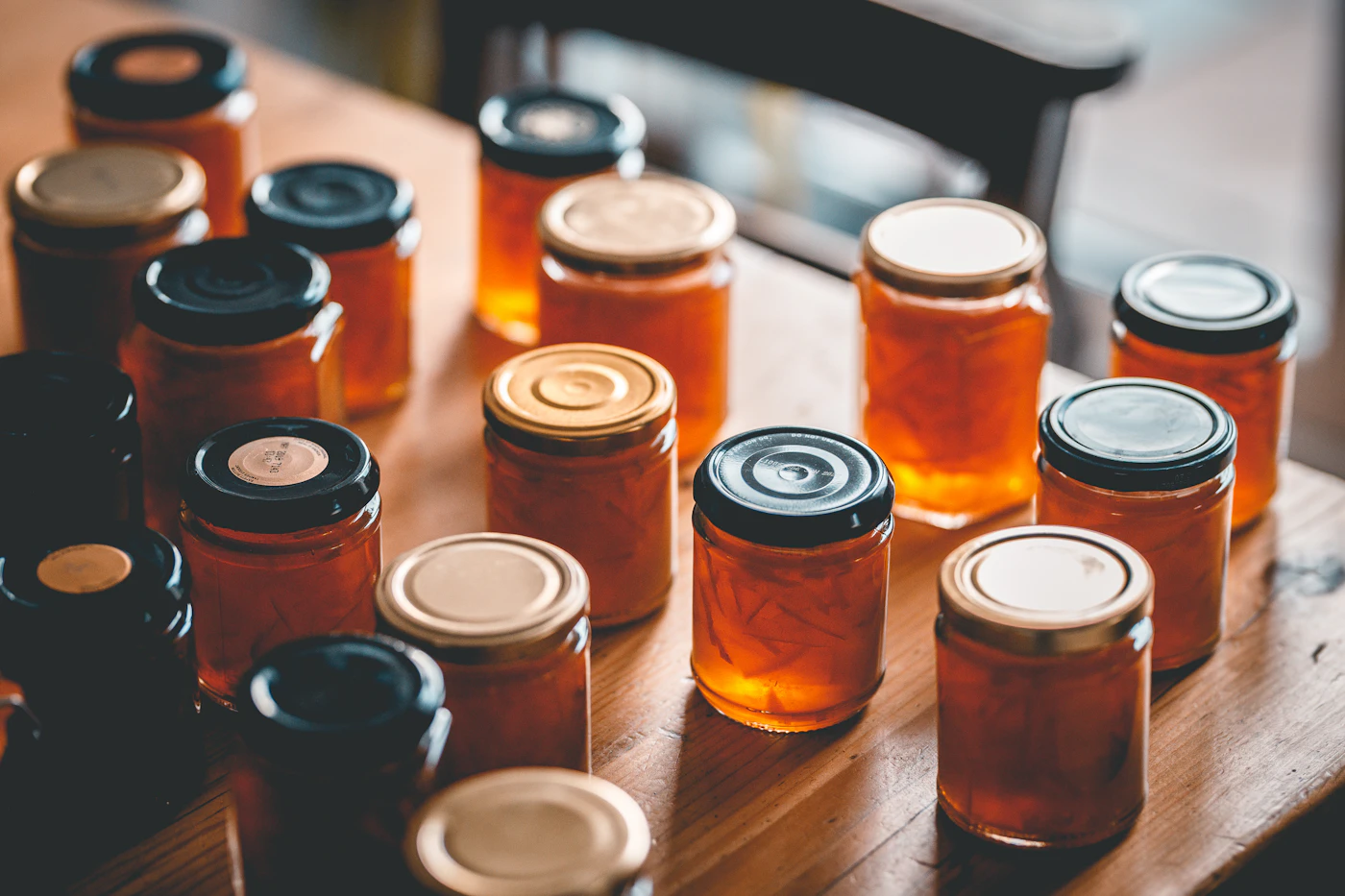
| Preserves and sweets | Jams, jellies, fruit chutneys, fruit butters, candy (not fresh fruit dipped in candy), flavored honey and maple sugar from exempt producers |
| Snacks | Granola and granola bars, popcorn, kettle corn and caramel corn, dry cereal and nut mixes with seasonings |
| Dry mixes and blends | Baking mixes in a jar, dry soup mixes, dry seasoning blends, dry herbs and herb blends, dry tea blends |
| Other | Roasted coffee, whole bean or ground |
Two details trip people up. Granola must use commercially dried fruit, and flavored honey or maple sugar is allowed only if the producer is already exempt under ORC 3715.021.
What can you not sell from a home kitchen?
You cannot sell potentially hazardous foods, acidified foods or low-acid canned foods (ORC 3715.025). In everyday terms, that means foods that spoil without refrigeration or that carry a canning risk.
- Cheesecake, cream pies, pumpkin pie and fry pies.
- Cream cheese frosting and filled donuts.
- Salsa, pickles and other acidified or canned foods.
- Freezer jam and sugar-free jam.
- Fresh pasta, raw cookie dough, hummus and beef jerky.
Packing food with reduced oxygen packaging, such as vacuum sealing, is also off limits (OAC 901:3-20-04). Only foods named in OAC 901:3-20-04 are allowed, and the examples above match the Ohio Department of Agriculture’s published list of products that cannot be offered as cottage foods. For a food that is not clearly on either list, ask the Ohio Department of Agriculture Food Safety Division or your local health department before you sell it.
What does a cottage food label need to say?
Every package needs a label with the following details (ORC 3715.023):
- The name and address of your business.
- The name of the food product.
- Ingredients, listed by weight from most to least.
- The net weight and volume of the product.
- The statement “This product is home produced.” in at least 10-point type.
Labels must also follow federal labeling rules in 21 CFR Part 101 (OAC 901:3-20-02), which is where major allergen disclosure comes from. Selling a product that is misbranded or adulterated is prohibited (OAC 901:3-20-05).
Where can you sell cottage foods in Ohio?
You can sell directly to customers from your home, at farmers markets and at festivals. Sales must stay in Ohio, because selling cottage food products outside the state is banned (OAC 901:3-20-05).
A licensed retail food establishment or food service operation under ORC Chapter 3717 may buy properly labeled cottage foods and resell them or use them as ingredients (OAC 901:3-20-02). The state rules set no sales cap and no registration step for home sellers.
Zoning is local. A city or township can limit home-based retail sales, so check with your zoning office before you put up a sign or open your kitchen to buyers.
Can the state inspect a home bakery?
The cottage food rules do not set up routine kitchen inspections, but the state can test your products. Cottage food products are subject to sampling by the director of the Ohio Department of Agriculture to check for misbranded or adulterated food (OAC 901:3-20-03). Refusing a sample is prohibited.
Key dates for Ohio’s cottage food rules
| Date | Change |
|---|---|
| September 10, 2012 | House Bill 487 created ORC 3715.025 and the cottage food framework |
| January 22, 2016 | Current text of OAC 901:3-20-01 to 901:3-20-05 took effect |
| March 21, 2017 | House Bill 505 amended the definitions in ORC 3715.01 |
| December 5, 2023 | The Ohio Department of Agriculture last updated Chapter 901:3-20 |
| September 30, 2025 | House Bill 96 amended ORC 3715.021, which keeps cottage food operations out of the food processing establishment category |
Real Ohio examples
- A Dayton baker who sells cookies and bread at a farmers market: covered, as long as every package carries the home produced label.
- A Toledo seller who wants to add cheesecake: not covered. Cheesecake needs a different food license.
- A Cleveland jam maker who ships jars to a buyer in Pennsylvania: not allowed. Out-of-state sales are banned.
- A Columbus home cook who makes salsa: not covered, because salsa is an acidified food.
Myths and facts
| Myth | Fact |
|---|---|
| “You need a license to sell cookies from home.” | Foods on the cottage food list need no state food license. |
| “Any homemade food is allowed.” | Only the foods named in OAC 901:3-20-04 qualify. |
| “You can ship cakes to anyone.” | Selling outside Ohio is banned. |
| “The label is optional at a farmers market.” | The label with the home produced statement is required on every product. |
Frequently asked questions
Do I need a license to sell baked goods from home in Ohio?
No, not for foods on the cottage food list. Cookies, breads, brownies and fruit pies are allowed without a food license if you follow the label, sales and sampling rules in OAC 901:3-20. Foods that need refrigeration fall outside the list and need a different license.
Can I sell cottage food online in Ohio?
The rules do not name online sales. They do ban selling cottage foods outside Ohio, so any order has to stay in the state. Keep the full label on every package you hand over or deliver, including the home produced statement.
Is there a sales limit for a cottage food business in Ohio?
The state rules set no annual sales cap and no registration requirement. That can change if you add foods outside the cottage food list, which would call for a license of its own. Check local zoning rules as well.
Can I sell cheesecake or cream pie from my home kitchen?
No. Cheesecake and cream pies are potentially hazardous foods, and ORC 3715.025 bars cottage food operations from making them. Fruit pies, cookies and breads are allowed. Ask the Ohio Department of Agriculture about licensing if you want to sell the others.
Can I sell homemade jam or salsa in Ohio?
Jam, jelly, fruit butter and chutney are on the cottage food list. Salsa is not, because it is an acidified food that ORC 3715.025 excludes. Freezer jam and sugar-free jam are also not covered.
What must be on a cottage food label in Ohio?
Your business name and address, the product name, ingredients in order by weight, the net weight and volume, and the line “This product is home produced.” in 10-point type (ORC 3715.023). Federal labeling rules in 21 CFR Part 101 also apply.
What changed on this page
- November 2, 2026: First published. Written against the Ohio Revised Code and Ohio Administrative Code in force on that date. See our editorial policy and corrections page.
If this affects you
For questions about whether a food qualifies, contact the Ohio Department of Agriculture Food Safety Division or your local health department. For zoning, call your city or township zoning office. For a dispute or a notice from the state, talk to an Ohio-licensed attorney.
The Ohio State Bar Association runs a lawyer referral service that can connect you with an Ohio-licensed attorney. For more topics, see the Everyday Life section. This page is general information, not legal advice.